
THE ANATOMY OF A QUERY LETTER
An example based on the familiar story of Home Alone
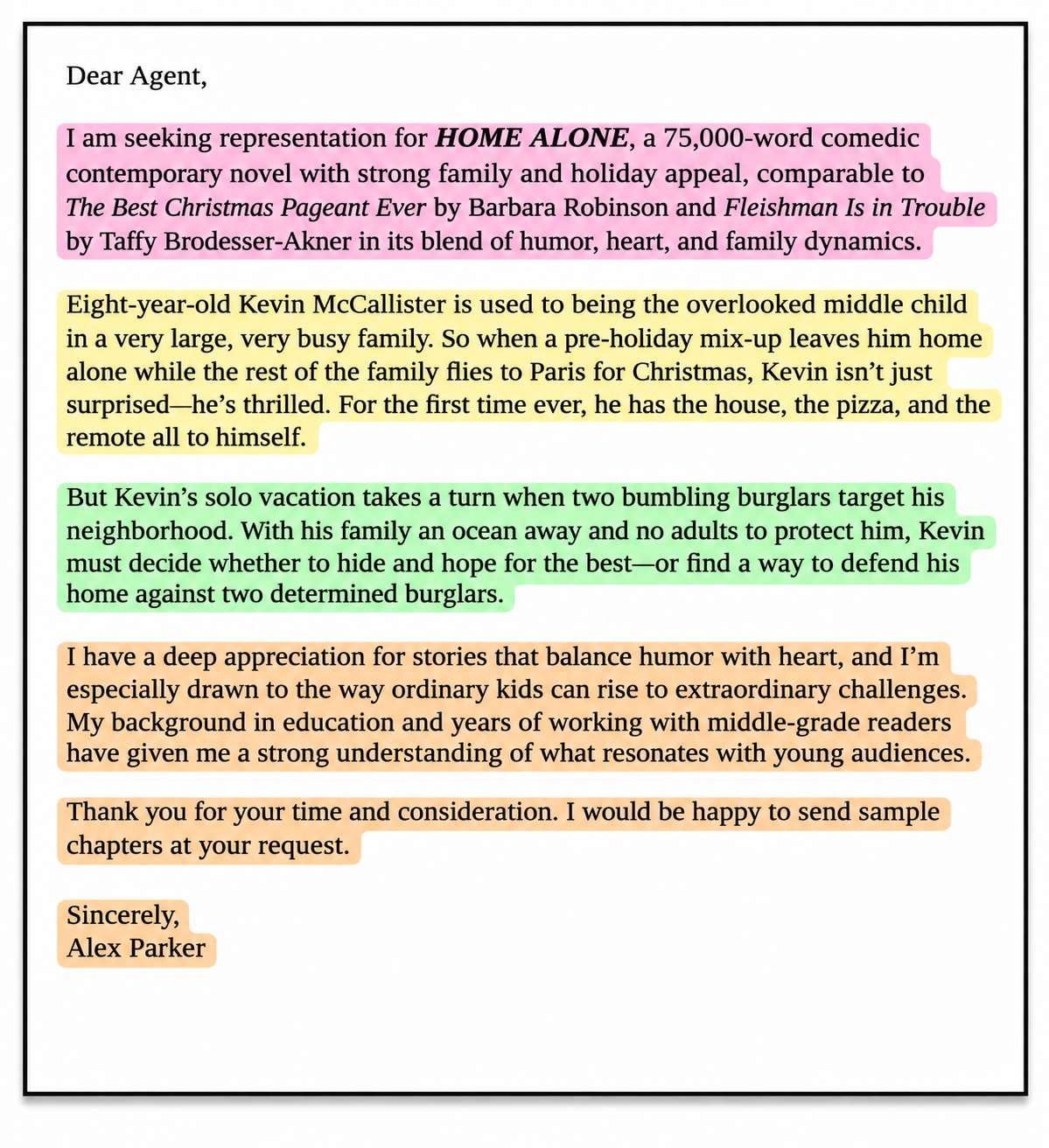
The example above is a fictional query letter based on the familiar story of Home Alone (1990), written by John Hughes. It was created for instructional purposes to demonstrate the conventions of a professional query letter.
Notice the four highlighted sections. Each serves a distinct purpose, and together, they provide the essential building blocks of an effective query.
Throughout this workbook, we'll examine these components individually. You'll learn what makes each one effective and complete guided exercises to begin developing your own.

The housekeeping section introduces your manuscript to a literary agent. Include your title, genre, and approximate word count. You may also identify comparable published works that appeal to a similar audience.

The hook introduces your story’s main character or situation in a way that creates immediate curiosity. It’s purpose isn’t to explain the entire story, but to capture the agent’s attention.

The pitch differs from the hook in that its primary focus is to give the reader a reason to stay interested. A strong pitch builds upon the hook by developing the central conflict, introducing obstacles, and establishing what’s at stake. Give your reader enough information to become invested in the story without revealing how it all unfolds.

Your author biography introduces who you are and what connects you to your manuscript. Focus on experiences or qualifications relevant to your work, rather than providing your entire life story
Close with a professional thank-you and your name. Keep it concise and courteous.
Now, Let’s Build Yours.
You’ve seen how the pieces fit together. Let’s build your query letter, one component at a time.